

Today's Mental Health Challenges Require a Different Approach

70%+
Schools report rising student mental health needs¹

Adolescents with mental health conditions are disengaged at school²
44%

19%
Average student utilization of school-based mental health services³

30-50%
Premature dropout from outpatient mental health treatment⁴
Plutonic Therapy
A engaging and evidence-based therapy platform purpose-built for our younger generations

Licensed Therapists
Evidence-based care from trained clinicians.

Interactive Virtual Spaces
Comfortable, calming envirnoments that reduce pressure.

Shared Activities & Tools
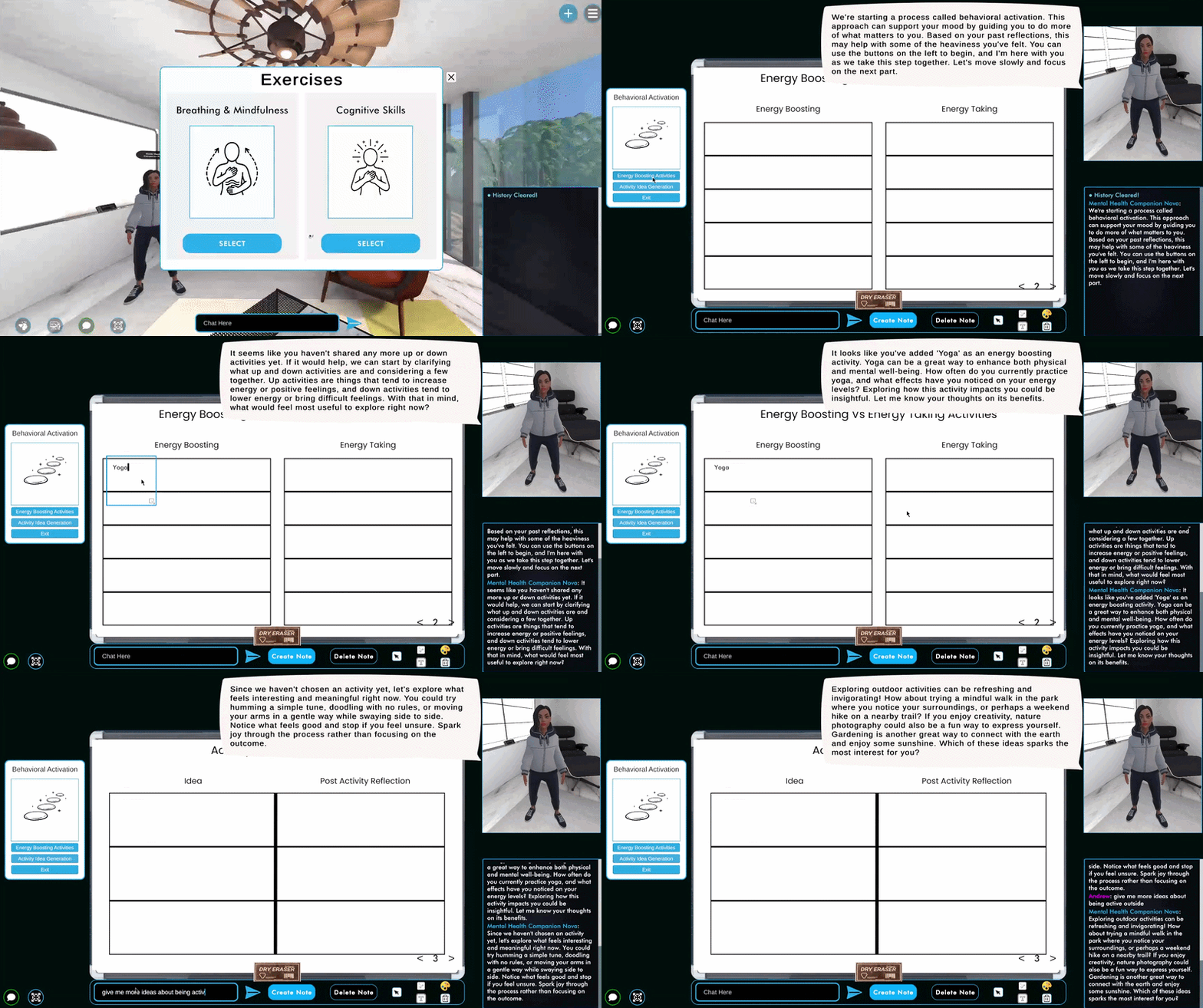
Full suite of communication tools such as video and message chat. Whiteboards, tools and customizable avatar based interactions

Measurement Based Care
Track progress and outcomes that matter.

Secure & HIPAA Compliant
All Plutonic therapy services are delivered in a HIPAA-compliant environment, ensuring your sessions and records are secure.

Engaging Virtual Environments

Collaborative Whiteboard

Cognitive Tools and Interactables
Built Specifically For Youth
A engaging and evidence-based therapy platform purpose-built for our younger generations

Children & Pre-Teens
8-12

Teens
13-19
Focus Areas


Anxiety Disorders
Externalizing Disorders
Neurodevelopmental Disorders
Bullying & School Stress Related Concerns
Depression
Trauma & Life Transitions
Supporting K-12 Schools
Seamless behavioral health support for students and families.
Expand access and reduce wait times
Improve engagement and retention
Ensure continuity of care
Reach students who struggle with traditional therapy
Seemless collaboration with your teams and workflows


Referral
Enrollment
Match
Therapy
Progress
Student is referred by school staff or parent
Family completes intake, consent, and insurance verification
We match the student with the right therapist
Students receive engaging, evidence-based therapy tailored to their needs
Care coordination and outcome tracking

Impact
Improved well-being and academic success

Trained and Licensed Therapist

Insurance Billing

Parent Coordination

MTSS-Aligned Care

Flexible Implementation
Why Plutonic Virtual Therapy
Plutonic's evidence based therapy services are built to help you and your loved ones.

Safely Express Yourself
Research shows the numerous benefits of using an avatar in a virtual environment. Digital representations of you can create a sense of comfort and allow you to safely express your feelings and experiences. One Australian study found that over 25% of people prefer to speak about negative experiences during therapy in virtual reality versus face to face.¹

Effectively Address Your Needs
Research shows virtual interactive spaces for counseling can be just as effective as in-person counseling. Studies also show cognitive behavioral therapy using virtual spaces facilitated by licensed mental health professionals can be just as effective as therapy in real life.² Our virtual spaces are designed with therapeutic qualities in mind as you receive your therapy session.

Stay Actively Engaged
Tired of standard virtual therapy and meetings? We all are. Studies show we are more actively engaged and retain information better in immersive environments.

Secure & HIPAA Compliant
All Plutonic therapy services are delivered in a HIPAA-compliant environment, ensuring your sessions and records are secure. Data is encrypted and not shared or sold. Our therapy services follows strict healthcare privacy and security standards so you can focus fully on your therapy session with peace of mind.
Let's Transform Pediatric Behavioral Healthcare Together
Join us in advancing pediatric behavioral health through innovation and collaboration.

Clinical research and academic collaborations
Pilot programs and implementation partnerships
Outcomes measurement and real-world evidence
Scale evidence-based gamification solutions

Our Team


James Shu
Founder and CEO
Your go to mental health advocate. I’m James, a healthcare entrepreneur, developer, and virtual spaces builder on a mission to build technology that helps you heal. With a background in early stage healthcare innovation, I launched Plutonic from personal experiences as I see a great need for tech enabled mental health services to reach digitally native people.
Rachel H. Jacobs, Ph.D., P.C.
Clinical Research Advisor

Rachel Jacobs, PhD, is a licensed clinical psychologist and a Clinical Research Advisor to Plutonic. She brings extensive experience in clinical research methodology and advises on RCT design, evaluation strategy, and the fine-tuning of mental health large language models, with an emphasis on safety, validity, and real-world applicability. She is an Adjunct Assistant Professor at Northwestern University Feinberg School of Medicine with a research background in mechanisms of adolescent depression.
Jeanette Gurr, LPC CPCS
Clinical Supervisor & Lead Therapist Provider

Jeanette is a Georgia-licensed therapist with 20+ years of experience helping clients navigate trauma, anxiety, self-esteem, and depression. An LGBTQ+ ally, she creates a safe, empowering space for individuals, couples, and young adults no matter how complex the challenge.
Dr. Michelle Lake, EdD, LMHC, LCPC
Operations & Compliance Manager

Dr. Michelle Lake serves as Plutonic's Operations and Compliance Manager, bringing clinical leadership experience from organizations including Optum Behavioral Care, Hazel Health, and Florida International University. Her background in supervising large clinician teams, developing operational workflows, and leading quality initiatives supports strong compliance and high standards of care.
Magy Seif El-Nasr, PhD
Scientific Advisor

Magy Seif El-Nasr is a Professor and UC Presidential Chair at the University of California, Santa Cruz, where she directs the Game User Interaction and Intelligence (GUII) Lab. Seif El-Nasr’s work and expertise focuses on developing tools and techniques for authoring, adapting, and personalizing virtual environments, including interactive narratives, virtual AI characters, and serious games. Throughout her tenure, she published several books including: the first book on the subject of: Game Analytics, called Game Analytics.
Dr. Dawn McDaniel
Clinical Research Advisor and Child Psychologist

Dawn received her Ph.D. in Child Clinical Psychology from the University of Southern California and completed a fellowship in Applied Epidemiology at the Centers for Disease Control and Prevention (CDC). She has published on topics related to evidence-based interventions, technology, mental health, and youth development, and worked for large youth-serving organizations, like Boys & Girls Clubs of America and Outward Bound USA. Dawn is interested in ways that best practices from research can be translated into scalable interventions, innovative products, and meaningful youth outcomes.